Questions and answers
About the planner
Is this my official SIO pension?
No. It is an estimate from the figures you enter and our reading of the law. Only the Social Insurance Organization (SIO) can confirm your pension. Check with SIO before deciding to resign, retire or buy service.
Can anyone see the figures I type?
No. Everything is worked out inside your browser and your figures are never sent to us or anyone else. If you tick Remember on this device, your figures are kept in this browser only, and Forget my data deletes them. See Privacy and terms.
Who runs this, and does it cost anything?
It is a free, independent financial-literacy tool.
Your work history
Which work counts toward my pension?
Only periods when contributions were paid to SIO for you. Your SIO service statement shows them.
- Counts: jobs where your employer registered you with SIO, government service, and optional insurance you paid yourself.
- Does not count: internships or training where you were not insured, freelance or side work with no contributions, work abroad you did not insure with SIO, and gaps between jobs.
How do I find my service record?
- Open the SIO portal and sign in with your CPR and password, or with eKey.
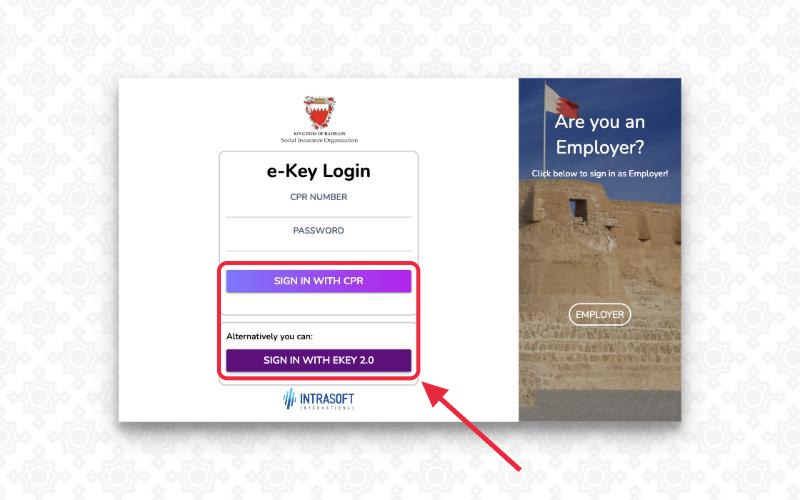
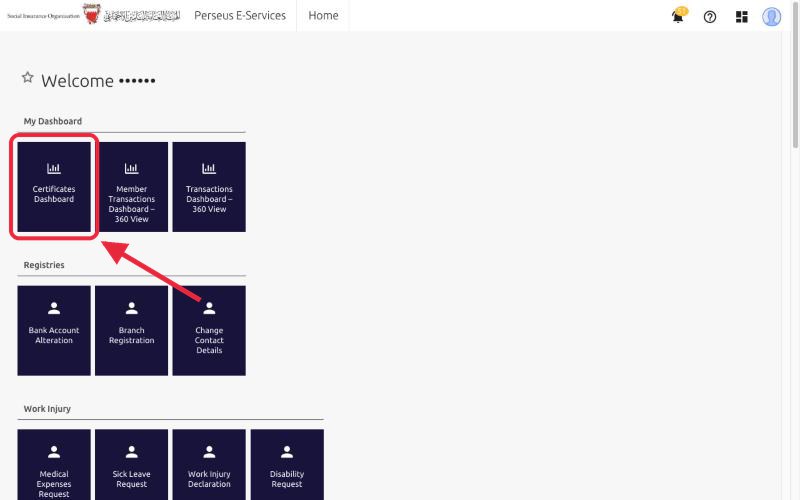
- On the home page, open Certificates Dashboard.
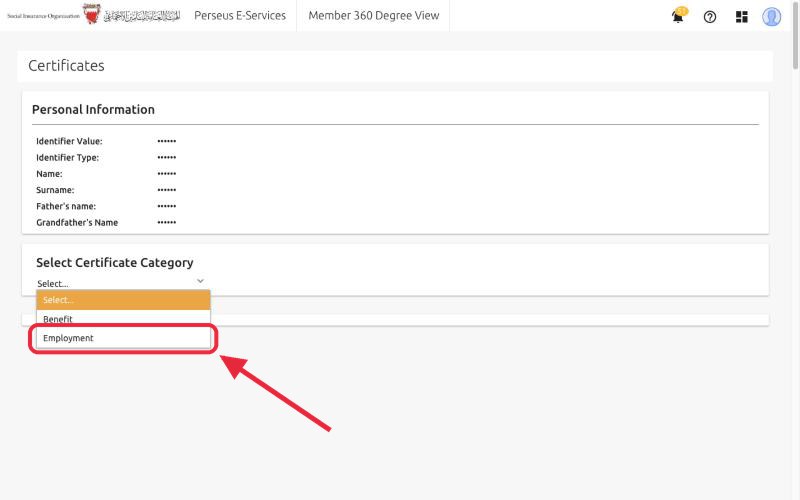
- Under Select Certificate Category, choose Employment.
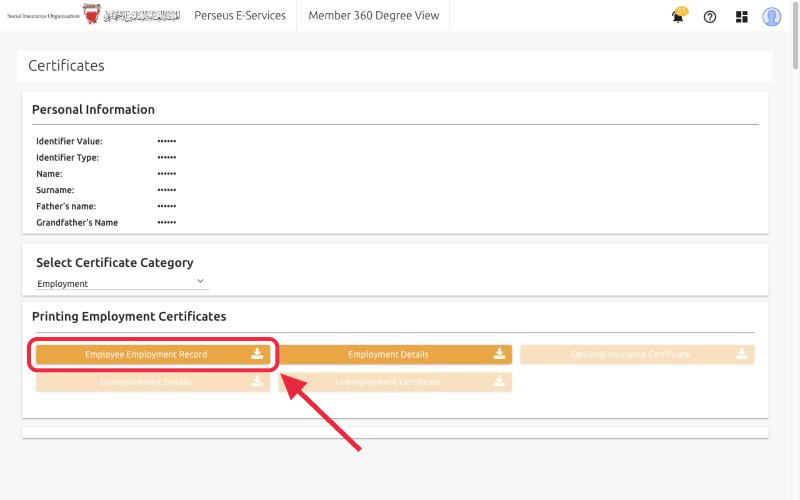
- Click Employee Employment Record. A PDF downloads listing each employer, with start date, end date and salary.
- Enter each employer in the planner. If the same employer appears on several rows, use one card and add a row only when the salary changes. Optional insurance periods aren't on this certificate, so add them from your SIO record.
Which salary do I enter?
The insured monthly salary as shown on your SIO record. For your current job, enter today's salary. Only the last 5 years affect the pension, so recent salaries matter most.
What yearly pay rise should I assume?
Count promotions as well as the yearly raise. If your yearly raise is around 2% to 3% and you expect promotions along the way, about 5% or a little higher is a fair figure. Your own history is the best guide: compare your first and latest salaries. If unsure, try two figures and compare.
How the pension works
How is the pension worked out?
Each year of service earns 2% of your average monthly salary over your last 5 years, up to 80% (40 years). The insured salary is capped at BD 4,000 a month, and the average cannot exceed 150% of your salary at the start of those 5 years. The pension is at least BD 200 from age 55.
When can I start my pension? (private sector)
- 20 years of real service: a pension straight away, at any age, with an early cut of 20% under 45, 15% under 50 and 10% under 55.
- 15 to 19 years: a pension from 60, or a lump sum instead.
- Under 15 years: a lump sum only.
- At 60: 15 years is enough, with no cut.
What's different in government service?
A pension at 60 needs 15 years. Before 60, an early-retirement request needs 20 years, and resignation needs 25 years, or 20 from age 50, with a cut of 5% under 45 and 2.5% under 50. Leaving with too few years pays a reward instead of a pension.
What if I leave before I qualify for a pension?
Private sector: a lump sum of 15% of your average monthly salary for each month of service (under 1 year, your own 7% contributions are refunded). Government: a reward based on your years of service, reduced if you resign.
What happens after 40 years of service?
The pension stops rising at 80%. Each year above 40 is paid as cash (15% of a year's salary, up to 7 years), or you can turn up to 5 of them into extra pension, up to 90%.
What are virtual years, and are they worth buying?
You can buy up to 5 years of service (across all pension laws). Once bought, they raise your pension and count in lump sums and the years-above-40 options. They never count toward the 20 years needed to retire early. Whether they pay off depends on the price and how long you draw the pension. Try it in the planner and confirm the price with SIO.
What is the living improvement allowance?
A monthly government supplement SIO pays to pensioners by pension band. It is set through the budget and can change, so the planner shows it on its own line and leaves it out of the plan unless you tick it.
Will my pension rise with prices?
Not automatically: yearly pension increases are suspended (Decree-Law 21/2020). So a fixed pension buys less each year. That is why the planner shows figures in today's money and plans for prices rising.
Closing the gap
How is inflation worked out?
We use Bahrain's official consumer price index from iGA (data.gov.bh). The planner compares the latest month with the same month 10 years earlier and turns the rise into a yearly rate, so a few unusual years don't skew it. If 10 years of monthly data aren't available yet, it uses 5 years, or else the last 12 months. It updates as iGA publishes each new month, and the goal page shows the rate and the months it used.
How much income should I aim for?
A common rule is 70% to 80% of your final salary, but your own spending matters more: housing, loans, children, and health costs later in life. Start from what you spend today, in today's money.
What is the withdrawal rate, and why does the plan pick the bigger pot?
The withdrawal rate is the share of your savings you take out each year. The plan works out two pots: one from your rate, and one that lasts to the planning age with prices rising. It uses whichever is bigger, so the money doesn't run out early.
Where can I invest, and how do I check a firm?
Common choices are funds, sukuk and bonds, shares, and savings plans, including Sharia-compliant ones. Before using any firm, check it is licensed on the Central Bank of Bahrain's register (cbb.gov.bh), and ask about fees and risk. A licensed adviser can help you choose what suits you. Investments can lose value.
Non-Bahrainis
How does end-of-service pay work?
Half a month's pay for each of the first 3 years, then one month's pay for each year after that, worked out pro rata on your last wage, for each employer.